


How to Remove Weeds from Block Paving for Good

Last Updated: November 18, 2026
Quick Summary
To remove weeds from block paving, pull the tops by hand, then run a hooked weeding knife along each joint to lever out the full root, and brush out the soil and old sand so the joint is clean and empty. Snap only the top off and root regrowth is near certain, so refill joints with kiln-dried sand afterwards.
Never top up paving joints with soil or compost, as you are feeding the problem.
Skip cheap folding knives because the blade bends on the first stubborn root.
Work on a dry day so debris brushes out of the joints easily.
Never re-sand a wet driveway because the sand clumps and will not fill the joints.
Salt is a soil persistent that rain can wash sideways into nearby beds and planting.
Weeds back again every year?
We clean, re-sand and restore block paving across Haddington and East Lothian.
Table of Contents
Why Weeds Grow in Block Paving Joints
Weeds in block paving are not bad luck. They are a design feature of an empty joint. If you want to know how to remove weeds from block paving properly, you first need to understand why they keep coming back. Across East Lothian, the pattern is usually the same.
Block paving is made of thousands of small gaps. Each gap is a trap for soil, grit and seed.
The Role of Jointing Sand and Weed Seeds
Jointing sand is the kiln-dried sand brushed into the gaps between blocks. It locks the blocks together and blocks the light.
Wind drops seed. Birds leave droppings. Moss grows first, then holds damp, then weeds root into it. A joint with no sand will sprout something within weeks.
Watch out: never top up joints with soil or compost. You are feeding the problem.
Weed Removal Tools for Paving: What You Actually Need
You do not need much. A few cheap tools do almost all the work.
Block-paving knife or weeding knife with a hooked blade for levering roots out of joints
Stiff hand brush for sweeping out loose dirt and debris
Sturdy broom for clearing the surface
Skip the cheap folding knives. The blade bends on the first stubborn root. A fixed hooked blade lets you scrape and lever in one motion.
For bigger areas, a patio knife with a long handle saves your back.
Step-by-Step: Removing Weeds and Roots from Paving Cracks
Here is a method that works on most block paving, brick paving or patio. Work on a dry day so the debris brushes out easily.
Clear the surface. Sweep off loose dirt, leaves and debris with a stiff broom.
Pull the tops. Hand weed the easy growth first and drop it straight into the bucket. Do not leave it on the paving.
Scrape the joint. Run the hooked blade along the gap to loosen the weed.
Lever out the root. Hook under the root and lift. If you only snap the top off, root regrowth is near certain.
Brush out the gap. Sweep out soil and old sand so the joint is clean and empty.
Check every joint. Walk the area and repeat on anything you missed.

The last step matters most. A clean, empty joint is the only joint that stays weed-free.
Tackling Stubborn Weeds, Moss and Lichen
Some growth will not shift with a knife alone. Moss and lichen grip the surface of the block, not just the joint.
For moss, scrape it off with the knife, then treat the joint. For deep-rooted weeds like dandelions, cut the top and lever the whole taproot out.
For black lichen, a dedicated patio cleaner applied to the whole surface works better than spot scrubbing. Leave it to dwell, then rinse.
Pressure Washing Block Paving: Benefits and Risks
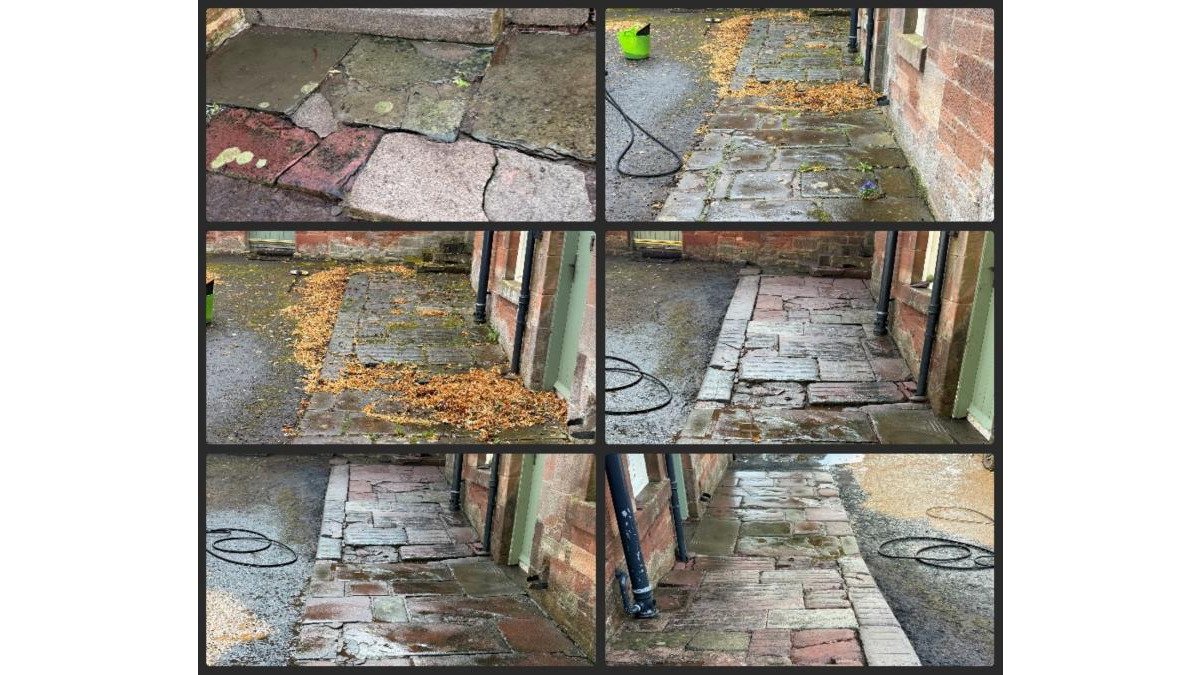
Pressure washing block paving strips out years of grime, algae and moss in one pass.
Renovation Dan
The risk is simple: too much pressure blasts the jointing sand out from between the blocks. Once the sand is gone, the blocks shift and weeds move in.
If you are cleaning yourself, follow a safe pressure washing guide so you use the right nozzle and pressure setting.
Re-sanding Block Paving Joints After Cleaning
Re-sanding is not optional after a wash. It is the step that keeps the paving stable and weed-free.
Use kiln-dried sand, not builder's sand. It flows into the gaps, sets firm and resists washing out.
Why it matters: sand-filled joints leave no room for seed to land and no light for it to grow. A guide on why re-sanding matters covers the method in more detail.
Watch out: never re-sand a wet driveway. The sand clumps and will not fill the joints.
How to Stop Weeds Growing in Block Paving
No method stops weeds permanently, because seed arrives from above, wind, birds, and the soles of shoes. What you can do is make the joints inhospitable and catch new growth early. For a dedicated prevention guide covering re-sanding and sealing, see how to prevent moss on block paving. The realistic goal is a driveway that needs only a short inspection once a month rather than a full clear-out.
The three mechanisms of prevention
Full joints. A joint filled with kiln-dried sand has no light and no air pocket for a seed to root into. This is the single biggest lever.
A clean surface. Seed sitting on the paving surface is easy to sweep; seed sitting in a damp film of moss and grit is already germinating.
Early intervention. A seedling pulled in April takes seconds; the same plant pulled in August has a taproot and a seed head.
A realistic seasonal schedule for East Lothian
East Lothian's damp coastal air and mild winters mean moss grows almost year-round, and weed seed germinates earlier than in drier inland counties. A workable routine looks like this:
Weekly (March-October): sweep the surface so seed and grit never settle.
Monthly: walk the joints and pull anything new. Ten minutes with a hooked knife.
March/April: top up jointing sand after winter wash-out, and treat any moss before it holds damp.
When it is not just weeds: failed joints and wider paving problems
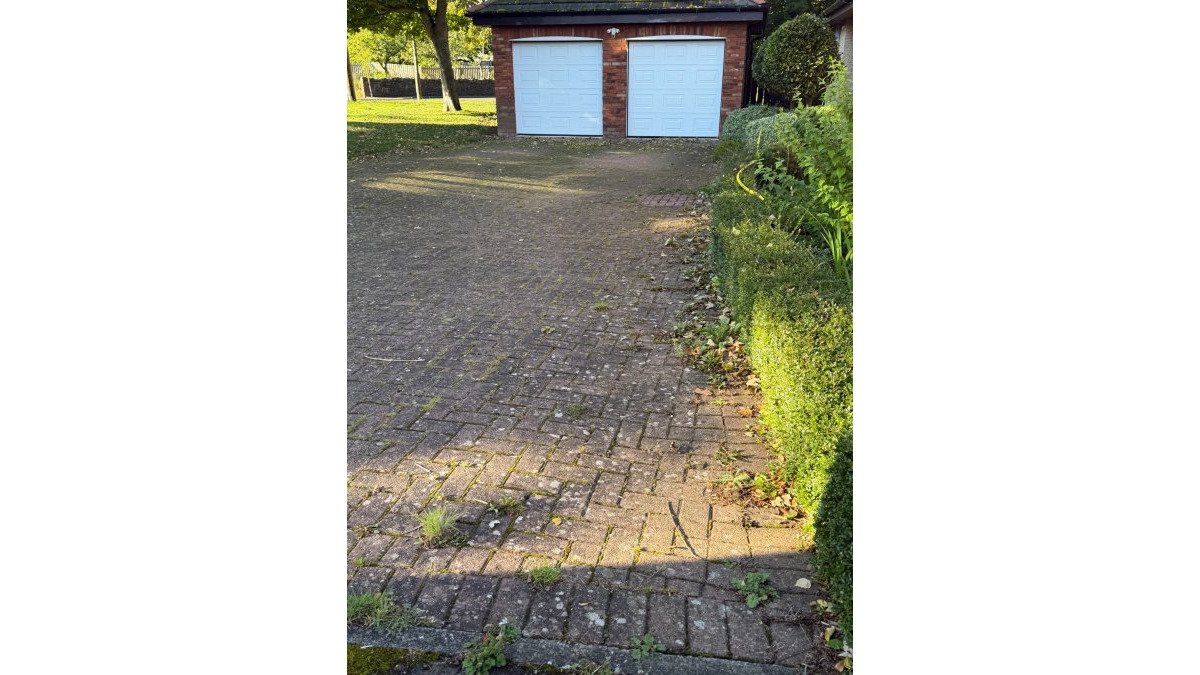
Weeds in a joint are normal. Weeds in a wide, empty joint are a symptom. If you can push a finger into the gap, or if the blocks rock when you step on them, the jointing sand has gone and the bedding layer may be failing.
Watch out: do not keep re-sanding a joint that is failing structurally. If the blocks move, the sand will not stay, and you will be back to weeds within a month.
Sealing: what it does and does not do
A penetrating sealer slows moss and algae by reducing water absorption, and it makes sweeping easier. It does not stop weed seed from landing in the joints, and it should not be applied to damp paving or to joints that are not already full of sand. Seal after re-sanding, not instead of it.
The honest expectation
A well-maintained block-paving driveway in Haddington will still see some weed growth each year. The difference between a driveway that looks neglected and one that looks cared for is not a permanent cure, it is a routine that catches problems while they are still small. If you would rather hand that routine over, we offer professional driveway cleaning in Haddington and across East Lothian, including joint restoration after cleaning.
Salt, Vinegar and Weedkiller: Safe Use on Paving
Household remedies and garden chemicals all work on the same principle: they kill the top growth, but most leave the root alive. That is why a joint treated with salt or vinegar in April often has fresh growth by June. Understanding the mechanism tells you when each option is worth using.
Salt (sodium chloride)
Salt draws water out of plant cells by osmosis, so the weed wilts and dies. It is cheap and effective on path edges and gravel, but it is a soil persistent. In a block-paving joint, salt sits in the sand and grit and is slowly washed into the bedding layer and nearby beds. Salt can move sideways in rain and damage nearby soil and planting.
Vinegar (acetic acid)
Household vinegar is typically 4-8% acetic acid. It burns the leaf surface on contact, which is why it works on young seedlings but barely touches a dandelion with a taproot the thickness of a pencil. It is non-selective: it will scorch any plant it lands on, including the edges of lawn and border plants. Do not mix it with salt to "boost" it, the combination is harder to control and no more effective on deep roots.
Chemical weedkillers
In the UK, garden weedkillers are regulated by the Health and Safety Executive (HSE) and must carry a MAPP (Ministerial Approval) number on the label. The label is the law: it sets the maximum dose, the safe distance from water, and the re-entry time for children and pets. Two practical points matter on block paving:
Glyphosate-based products are systemic, so they reach the root. They are slow (7-14 days for visible die-back) and are inactivated on contact with soil, which means they work best on actively growing weeds, not on dormant ones.
Contact herbicides (often based on fatty acids or pelargonic acid) burn the top growth quickly but do not kill roots, so regrowth is likely.
Watch out: never spray on a windy day, never spray near drains or watercourses, and never use a weedkiller on paving where children or pets will be back on the surface before the label's re-entry time has passed.
Children, pets, drains and runoff
Keep children and pets off treated paving until the surface is dry and the label's re-entry period has elapsed.
Sweep, do not hose, treated areas, runoff carries salt, vinegar and herbicide into drains and then into local burns and the Forth.
Cover or move pet bowls, and keep dogs from licking treated joints.
The trade-off table
Method | Effort | Best for | Main risk |
Hand pulling and knife | Medium | Small areas, isolated joints | Must remove the root |
Salt | Low | Path edges, gravel, away from beds | Soil persistence; plant damage |
Vinegar (4-8%) | Low | Young surface weeds | Non-selective; weak on taproots |
Glyphosate (label rate) | Low | Established deep-rooted weeds | Re-entry time; runoff to drains |
Contact herbicide | Low | Quick top kill | Regrowth from root |
Pressure washing plus re-sand | High | Whole driveways | Needs joint restoration after |
None of these replaces the joint. A weedkiller that kills the top growth still leaves an open, sand-starved joint ready for the next seed. Treat the weed, then fix the joint.
Keeping Haddington Driveways Weed-Free: A Maintenance Plan
East Lothian weather does you no favours. Damp coastal air, mild winters and shaded north-facing drives all feed moss and weed growth. A little routine beats a big clean-up.
Weekly: sweep the surface
Monthly: check joints and pull any new weeds
Spring: top up jointing sand and treat moss
If you would rather hand it over, we offer professional driveway cleaning in Haddington and across East Lothian.
Weeds will always find a way into an empty joint. The fix is not a stronger weedkiller, it is a driveway with full joints and a proper clean behind it.
Frequently Asked Questions
What is the easiest way to remove weeds from block paving?
For most driveways, hand weeding with a block-paving knife or hooked blade is the easiest and safest method. Work along the joints, scraping and levering out the weed plus as much root as you can reach. Follow with a stiff broom to clear loose dirt and debris. It takes longer than chemical treatments but avoids damaging the blocks or surrounding plants, and it lets you spot failed joints that need re-sanding.
Can you use a pressure washer to remove weeds from block paving?
Yes, but with care. A pressure washer blasts weeds and roots out of paving joints quickly, but too much pressure strips the jointing sand and can leave white streaks or loosened blocks. Use a fan nozzle, keep the wand moving, and work at a shallow angle. After pressure washing block paving, you will almost always need to re-sand the joints, so plan for that step before you start.
Will vinegar or salt kill weeds between paving blocks?
Both can kill surface growth, but neither solves the problem long term. Salt builds up in the jointing sand and can damage nearby plants and soil, and it is not kind to pets or wildlife. Vinegar burns off top growth but often leaves roots to regrow. If you use either, apply carefully on a dry day, keep pets and children off the area until dry, and expect to repeat the treatment.
How do you stop weeds growing back between block paving?
The most reliable method is to restore the joints. After removing weeds, refill the joints with kiln-dried sand, compact it, and top up any low spots. Keep the surface swept and free of loose dirt and debris, because weed seeds germinate in the silt that collects in cracks. A yearly joint check and re-sand, plus prompt removal of new growth, keeps recurring weeds to a minimum.
Comments